Before a Single Watch Is Unveiled
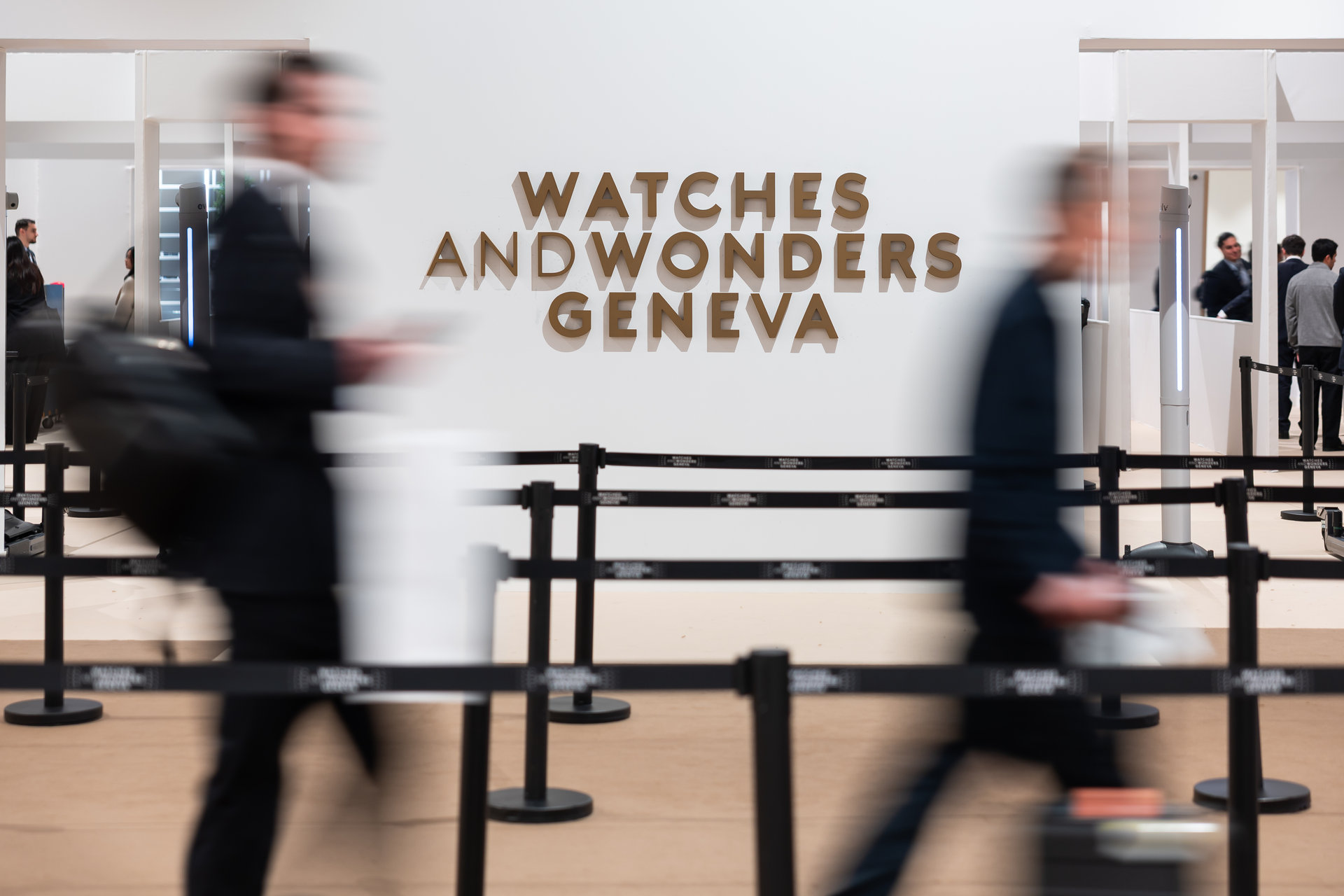
Watches and Wonders 2026 runs April 14–20 at Palexpo, Geneva. Professional days: April 14–17, by invitation only. Public access: April 18–20. The numbers are records across every metric 66 exhibiting houses (11 new versus 2025), 6,000-plus international retailers, 1,600 accredited journalists, 15,000 VIP guests, and an estimated 55,000-plus total visitors from 125 countries.
But the analysis that matters most happens before April 14. The signals embedded in pre-show announcements, secondary market movements, and strategic positioning by the major houses tell you more about what this edition means for the industry, for collectors, and for investors than any single product launch. Here is the full picture.
Signal One: The Return of Mechanical Complications
The pendulum has swung. After years in which the watch industry's narrative was dominated by connected watches, health monitoring, and digital integration, W&W 2026 is signalling a decisive return to the mechanical complication as the aspirational object.
Patek Philippe will present a new Grandmaster Chime variant: 20 complications, 47mm double-face case, perpetual calendar with retrograde displays. Announced at €3.2 million, with fewer than 10 units produced per year and an indefinite waitlist. This is not a commercial product in the conventional sense it is a statement of what Patek believes watchmaking is for.
A. Lange & Söhne returns with the Datograph Perpetual Tourbillon re-edition in rose gold: 684 components, six weeks of assembly per piece. The Datograph is one of the most critically respected complications in modern watchmaking; this re-edition acknowledges that the secondary market for earlier references has created demand for a new generation.
F.P. Journe, the most secretive of the major independent manufactures, will present a new reference in the Souveraine collection. Characteristically, Journe said nothing officially. The waitlist formed before the announcement was made.
The structural message is clear: the collectors who drive secondary market liquidity at the apex of the market and who exert disproportionate influence over trend direction have recommitted to mechanical complexity as the primary object of desire.
Signal Two: Rolex Consolidates Without Revolutionising
Rolex does not do revolution. It does iteration small, precise adjustments to established references that carry outsized semantic weight within collector culture. W&W 2026 continues that pattern.
The Datejust receives nine new colour dials, with the olive lacquer variant generating immediate secondary market pre-orders before the official launch. The Explorer receives new palette options. Both are incremental, both are commercially reliable.
The most discussed anticipated development is more architecturally significant: the Jubilee bracelet reportedly being introduced on certain Submariner references. This requires context for those outside collector culture. The Jubilee bracelet characterised by its five-link construction with smaller, more refined links has historically been associated with Rolex's dress and semi-dress watches: the Datejust, the Day-Date. Its presence on the Submariner, which has traditionally worn the Oyster bracelet as a mark of its tool-watch heritage, would represent a deliberate blurring of categories. Luxury sport without aesthetic compromise. The Rolex equivalent of wearing a dinner jacket to a board meeting.
If the Jubilee-on-Submariner materialises as expected, it signals where Rolex reads its own customer someone for whom the sport watch has become a social occasion watch as much as an activity watch.
Signal Three: Audemars Piguet Returns to the Table
This is the most strategically significant development of W&W 2026, and the one most likely to be underweighted in coverage that focuses on product launches.
AP abandoned the traditional watch fair format in 2020, pivoting entirely to a private event strategy the AP House concept, bespoke client experiences, direct retail relationships without the shared infrastructure of a collective fair. At the time, it was presented as a deliberate rejection of the old model and an expression of the brand's commercial and creative autonomy.
AP is returning to Watches and Wonders 2026. The reasons are instructive. The fair format fragmented as brands pursued independent strategies: organic social traffic to watch-fair coverage declined; private presentation costs increased significantly while their reach to qualified international buyers became less predictable; and the concentration of serious retail and collector demand in one physical place for seven days proved to have a structural efficiency that individual brand events cannot replicate.
AP's return does not mean that private events failed. It means that even the most commercially autonomous luxury brand recognises the value of shared infrastructure when it is working. W&W, unlike its predecessor Baselworld, is working. The record visitor numbers confirm it.
The Nautilus at 50: The Anniversary Effect in Action
2026 is the 50th anniversary of the Patek Philippe Nautilus. The original Nautilus was designed by Gérald Genta and introduced in 1976 the same designer, the same year context, as the AP Royal Oak, though the Nautilus followed four years after the Royal Oak's 1972 debut.
Anniversary editions at Patek have historically triggered a specific secondary market dynamic: the "anniversary effect." When a major house prepares a significant edition, earlier-generation references in the same line appreciate pre-announcement as collectors and investors position ahead of the news cycle. Secondary market data from the months preceding this year's fair shows earlier-generation Nautilus pieces particularly the 5711 (discontinued) and reference-era 3700 pieces up 12% to 18% on secondary market pricing since October 2025.
The most credible pre-announcement speculation centres on two possibilities: an annual calendar integration within the original 40mm case bringing serious horological complication to the Nautilus's most recognisable dimensions or a first-ever material variation for the reference (ceramic, titanium, or a new Patek alloy). Either direction would generate both critical and commercial intensity. The choice will be read as a signal about Patek's conception of what the Nautilus means in 2026.
The Tudor Phenomenon: Brand Power at Every Price Point
One of the most commercially revealing stories of W&W 2026 is not a €3 million complication. It is a €2,000-to-€4,000 Tudor watch.
The Tudor Black Bay 58 GMT in bronze 39mm case, bidirectional GMT function, vintage leather strap sold out pre-orders at European authorised boutiques within 72 hours of announcement. In a market segment that the watch industry has consistently underserved in terms of waitlist culture and secondary market activity, a Tudor reference generating genuine scarcity and secondary market premiums is significant data.
Tudor is Rolex's sister brand, positioned in the mid-market and produced with less brand mystique and lower price points. The Black Bay 58 GMT in bronze demonstrating sell-out demand confirms that Rolex's brand architecture the halo effect of Rolex desirability extending to Tudor with a different value proposition is functioning efficiently across price points. For collectors who cannot access a Rolex Submariner at retail, Tudor at €2,000-4,000 is increasingly not a consolation prize. It is a deliberate choice with its own collector rationale.
Secondary Market as Verdict: Who Won Before the Shows Begin
The secondary market is the most honest instrument for reading collector confidence ahead of W&W. Retail prices are institutional. Secondary prices are real-time sentiment.
Current secondary market data shows: Vacheron Constantin Overseas Dual Time in steel already trading at +15% versus retail in March 2026, suggesting strong collector positioning ahead of any potential VC announcement. IWC Pilot Mark XXI in titanium is well-positioned on Chrono24 with consistent buyer activity. The Breitling Navitimer B01 Chronograph 43 in copper has intercepted a younger collector segment that Breitling did not explicitly target organic discovery driven by aesthetic appeal rather than brand heritage.
The market's pre-show positioning confirms the priority order: Patek and Vacheron for the serious collector; Rolex at all price points for the investor; AP for those who believe the return to shared fair format signals a new chapter; Tudor for those who want the cultural reference at a reachable entry point.
What W&W 2026 Is Really About
Watch fairs, at their best, are not product launches. They are barometers of where the industry believes value will concentrate over the next 3 to 5 years.
W&W 2026's most important messages: the mechanical complication is reasserting itself as the apex object of desire; Rolex understands its customer is evolving toward more social contexts; even the most commercially autonomous brands recognise the value of shared qualified demand; and the Nautilus's 50th anniversary is a moment to redefine what the reference means for the next generation.
The launches are the surface. The architecture underneath is what matters.