The Franchise: What $30 Billion Looks Like
Harry Potter is not a media franchise. It is a commercial civilisation. Since J.K. Rowling published the first novel in 1997, the property has generated an estimated $25–30 billion in cross-media revenue books, film, games, merchandise, live experiences making it the third-highest-grossing media franchise in history behind only the Marvel Cinematic Universe and Star Wars.
The numbers by category tell the scale of what Warner Bros. Discovery controls:
Books: 500 million copies sold across 80 languages, generating approximately $7.7 billion in cumulative revenue. Digital and audiobook sales set a record in the fiscal year to March 2025, generating £54.3 million in 12 months the franchise's strongest digital performance since launch.
Film: The eight original films and three Fantastic Beasts productions generated approximately $9.4 billion in global box office. The series remains one of the most syndicated film franchises in streaming history, occupying consistent positions in platform top-ten charts more than 15 years after the final film's release.
Video games: Hogwarts Legacy, the open-world RPG released in February 2023, sold 40 million units by December 2025, generating $1.3 billion in revenue a figure confirmed by Warner Bros. Discovery's CEO. It is one of the best-selling games of the decade.
Merchandise: The licensing business, operated through Warner Bros. Discovery Global Consumer Products, generates an estimated $3.5 billion annually at retail across toys, apparel, collectibles, and accessories. The total merchandise revenue since 1997 exceeds $15 billion.
This is the commercial infrastructure HBO is activating.
The HBO Series: What Has Been Confirmed
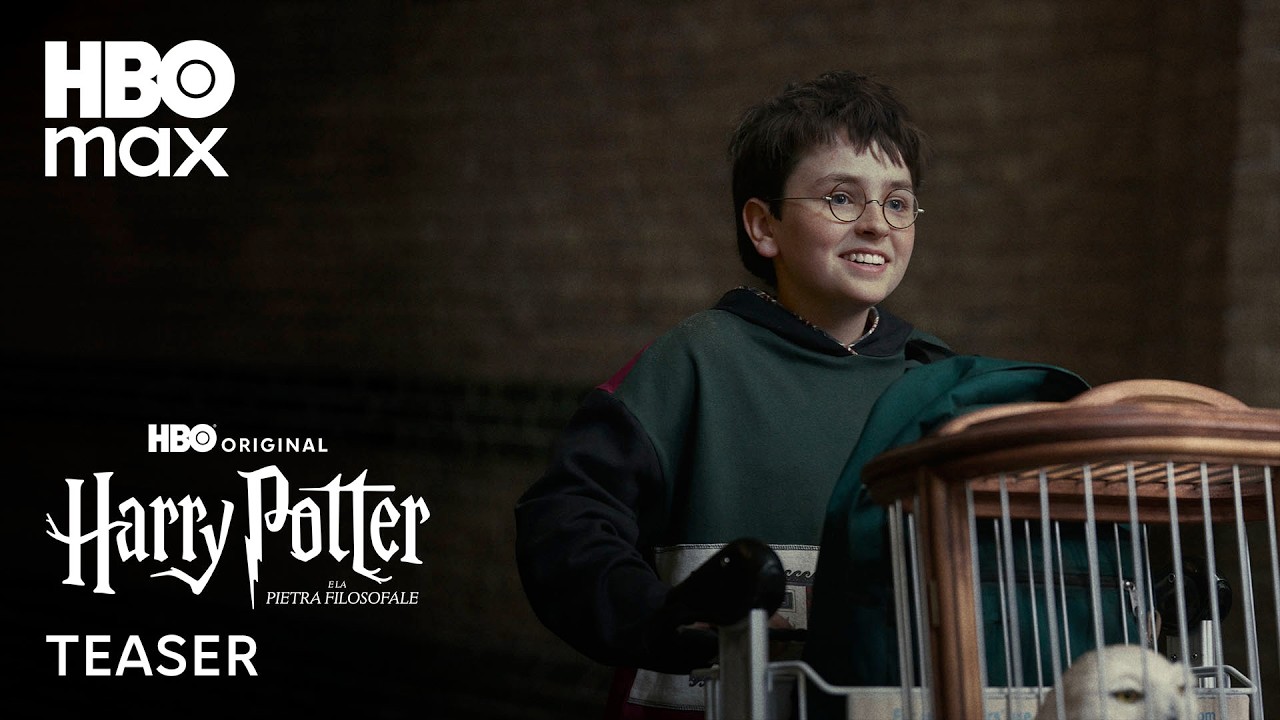
The HBO Harry Potter series premieres on December 25, 2026. Seven seasons are planned, one per book, spanning approximately one decade of production. Season one adapts Harry Potter and the Philosopher's Stone across eight episodes filmed at Warner Bros. Studios Leavesden the same physical location as the original films.
The production budget is significant by any standard. HBO Max head of programming Sarah Aubrey publicly acknowledged the investment is one the network "would not normally make with a television show." Published figures cite approximately $300 million per season, with per-episode costs reported at approximately $100 million placing it among the most expensive television productions ever commissioned, comparable to Amazon's The Rings of Power ($465 million for season one) and significantly above HBO's own House of the Dragon.
The creative team is the most meaningful signal of HBO's intent. Showrunner Francesca Gardiner and director Mark Mylod both come from Succession the most critically acclaimed prestige drama of the streaming era. J.K. Rowling serves as executive producer. The combination of prestige television pedigree and the original author's involvement creates a production architecture designed to satisfy both long-term fans and critics approaching the series without nostalgia.
The cast introduces entirely new faces for the principal trio Dominic McLaughlin as Harry Potter, Alastair Stout as Ron Weasley, Arabella Stanton as Hermione Granger, selected from 30,000 children auditioned globally while anchoring the adult roles with significant talent: John Lithgow as Dumbledore, Paapa Essiedu as Severus Snape, Janet McTeer as McGonagall, Nick Frost as Hagrid.
HBO Max global head JB Perrette described the series as "the biggest streaming event in the history of HBO Max and arguably in streaming, period." The Christmas Day premiere date the highest-intent viewing moment in the English-language streaming calendar underlines the scale of the commercial ambition.
The Investment Context: What the Collectibles Market Is Telling You
Before a frame of the HBO series had been filmed, the collectibles market was already pricing in the franchise's renewed commercial relevance.
In July 2024, a first-edition UK hardback of Harry Potter and the Philosopher's Stone sold for $216,000. Only 500 copies of the original UK hardback were printed in 1997; fewer than 200 entered private circulation, with the remainder distributed to libraries. Earlier that year, the original watercolour cover art by illustrator Thomas Taylor the visual that launched the franchise sold at auction for $1.92 million, far exceeding its $400,000–600,000 estimate.
These are not nostalgia transactions. They are informed collector markets pricing scarcity against a confirmed demand catalyst: the HBO series represents the franchise's largest cultural reactivation since the final film's release in 2011.
The LEGO Harry Potter secondary market, tracked across approximately 200 retired sets, has generated roughly 9% annualised average returns historically. The January 2026 25th anniversary wave eight new sets priced between $14.99 and $169.99 will join a secondary market that consistently rewards patience. Hasbro's confirmation as global master toy licensee for the HBO series, announced February 10, 2026, signals that the licensed collectibles market will expand significantly from 2027 as the series rollout begins.
The established collector-grade market first-edition books, original prop replicas, Noble Collection limited editions is the leading indicator. It is already moving.
The Luxury Fashion White Space
No Tier-1 luxury fashion house has claimed the Harry Potter HBO series.
This requires a moment of analysis, because the commercial logic of the opportunity is clearer than almost any brand strategy white space that currently exists. The original Harry Potter readership the children who bought the books between 1997 and 2007 are now 30 to 45 years old. This demographic is, with striking precision, the primary luxury consumer cohort. The average age of a Chanel customer is 35–42. The average age of a Dior ready-to-wear customer is similar. The overlap is near-total.
The precedent from comparable IP reboots is instructive in what it reveals through absence. When Disney launched The Mandalorian on Disney+ in 2019, the brand partnerships were mass-market: General Mills, Verizon, Sonos, Xbox. No luxury house. When Amazon launched The Rings of Power in 2022 at $465 million in production costs, the most expensive television season ever made at that point again no luxury house secured a formal partnership. Both IP activations left the premium consumer segment entirely unclaimed.
The luxury fashion house that moves first on Harry Potter HBO 2026 has a positioning opportunity with no direct competitive pressure. The logical candidates are not difficult to identify: Burberry, with its quintessentially British identity and the franchise's London-set cultural geography; a Dior capsule referencing the Parisian setting of the Fantastic Beasts-era Ministry of Magic land at Universal's Epic Universe; a Mulberry accessories collaboration referencing the franchise's tactile relationship with British craft; or, at the highest end, an Alexander McQueen collection exploring the dark aesthetic of the later books.
The partnership has not happened yet. The Christmas 2026 premiere date means the autumn 2026 announcement window typically September, aligned with fashion week cycles is the moment when brands will begin to move. The editorial intelligence position is to name the logic before the announcement occurs.
Wizarding World: The Experiential Luxury Angle
Universal's theme park division generated $9.836 billion in revenue in 2025, up 14.2% year-over-year driven primarily by the opening of Epic Universe in Orlando on May 22, 2025. Epic Universe's flagship Harry Potter installation, Wizarding World of Harry Potter Ministry of Magic, is themed around 1920s wizarding Paris and the 1990s British Ministry of Magic, with the centrepiece attraction Harry Potter and the Battle at the Ministry serving as the park's most technically ambitious dark ride.
Wizarding World is Universal's highest per-capita spend land system. Visitors to the Harry Potter zones spend significantly more on food, merchandise, and experiences than the theme park average a function of the franchise's unusually deep emotional investment in its audience and the premium positioning of the official merchandise ecosystem.
The luxury travel angle is structurally underdeveloped. Universal's VIP Experience programme, which offers guided private tours, front-of-line access, and dedicated dining, is currently positioned as a premium add-on rather than a standalone luxury product. The market for a genuinely luxury Wizarding World experience think Amangiri-level hospitality packaged around after-hours private access to the Ministry of Magic land does not yet exist formally. It is a product that would find a ready market in the same UHNW consumer cohort that is buying first-edition books at auction.
The Streaming Economics: What HBO Is Actually Buying
The commercial rationale for HBO's investment estimated at $2 billion or more across seven seasons is not direct subscription revenue alone. It is the same rationale that drove Disney to acquire Lucasfilm for $4.05 billion in 2012: a franchise of this scale is an infrastructure acquisition, not a content purchase.
HBO Max reported 128 million global subscribers as of Q3 2025. The service added 5.3 million subscribers in Q1 2025, with Harry Potter representing the largest confirmed catalyst for forward subscription intent in its announced slate. The comparison with The Mandalorian's effect on Disney+ which reached 100 million subscribers within 16 months of launch, driven primarily by Star Wars content suggests the subscriber acquisition value of the HP series could justify the production investment on that metric alone, before accounting for merchandise licensing, theme park uplift, and the franchise's broader commercial halo.
Warner Bros. Discovery's positioning of Harry Potter as the centrepiece of a ten-year content strategy signals something more specific: the studio views the franchise as its primary defence against continued market share erosion to Netflix and Disney+. The HBO series is not a content play. It is a platform play.


